Seasonal Patterns in Athletic Venue Evaluations Affecting Certification Timelines
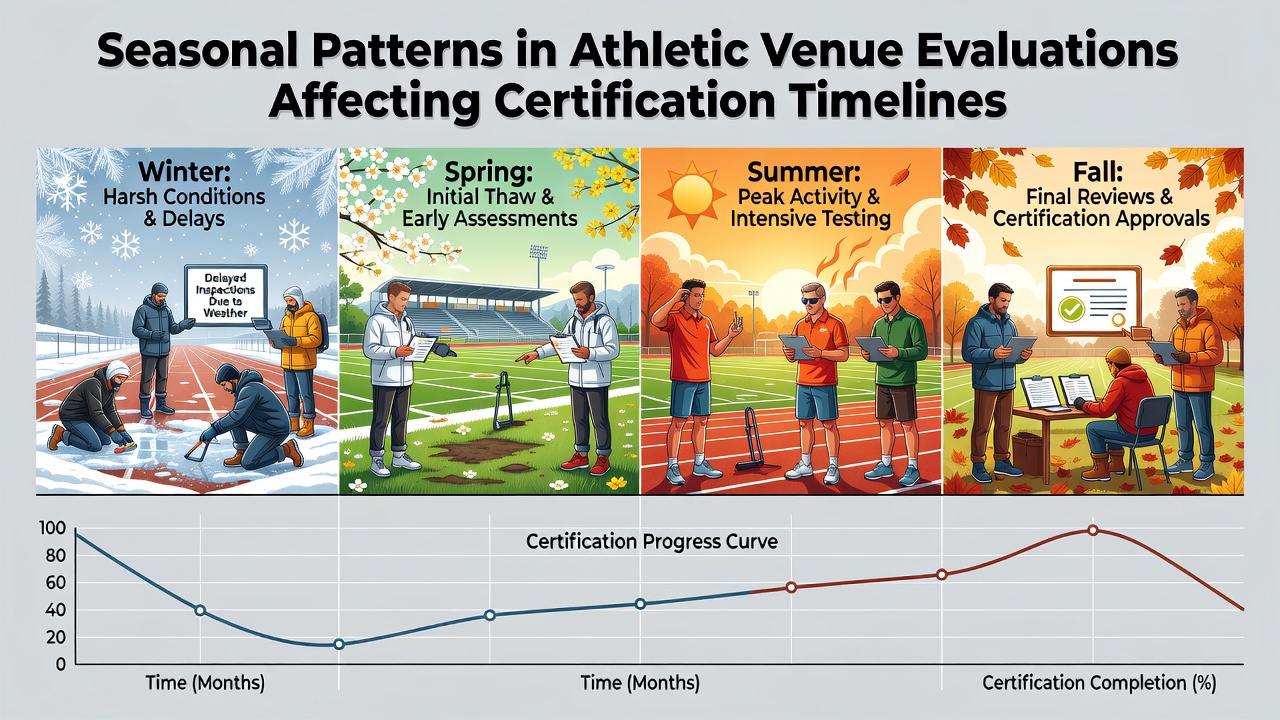
Seasonal patterns shape how athletic venue evaluations unfold because weather conditions, facility usage rates, and regional climate variations directly influence when assessments occur and when certifications receive approval. Data from multiple sports governing bodies shows that evaluations scheduled during peak winter months encounter more delays than those conducted in transitional seasons, which in turn stretches certification timelines by several weeks or even months depending on location and venue type.
Weather Conditions Drive Evaluation Scheduling
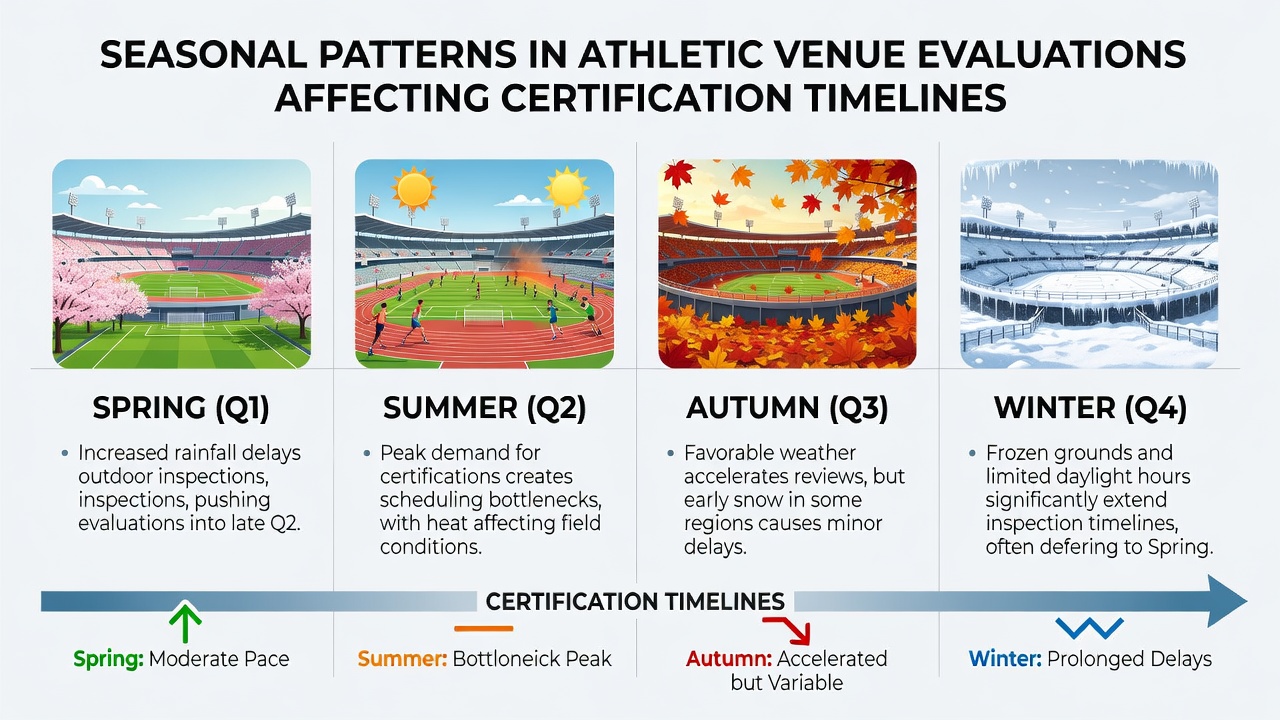
Heavy snowfall and freezing temperatures in northern regions often force evaluators to postpone on-site inspections of outdoor fields, tracks, and seating areas until surfaces become accessible again, whereas summer heatwaves in southern climates create separate challenges around equipment functionality and structural stress testing. Observers note that facilities in temperate zones experience more consistent evaluation windows during spring and fall, yet even there sudden storms can interrupt data collection processes that feed directly into certification decisions. Research indicates these interruptions accumulate across multiple venues, producing backlogs that certification bodies must resolve before issuing approvals.
Regional Variations Create Distinct Timelines
Venues located in coastal areas face different seasonal pressures compared with inland or mountainous sites because humidity levels and salt exposure affect material degradation rates that inspectors must document. According to findings published by the Australian Sports Commission, facilities in subtropical zones complete evaluations faster during drier months while those in colder provinces shift their assessment cycles toward late spring to avoid ice-related access issues. European data collected through sports infrastructure monitoring programs reveals similar north-south divides, with certification renewals in Scandinavia frequently extending into early summer whereas Mediterranean venues finalize processes by late spring.
Usage Patterns Compound Seasonal Effects
High school and collegiate athletic complexes see reduced activity during summer breaks, which opens evaluation windows that would otherwise conflict with game schedules or training sessions. This creates a ripple effect where certification applications submitted after spring evaluations often reach approval stages by June 2026 for facilities preparing for fall seasons, yet winter evaluations completed in January or February can push the same approvals into August or September. Figures from facility management databases show that multi-use venues experience longer processing periods when evaluations overlap with preparation for upcoming events, since additional compliance checks become necessary before final certification stamps are issued.
Documentation and Reporting Cycles
Evaluation reports generated during periods of stable weather tend to contain more complete datasets because inspectors can access all required areas without interruption, which accelerates review by certification committees. In contrast, reports compiled after weather-related delays sometimes require supplementary submissions that extend overall timelines. Those who've tracked these patterns across multiple years report that venues submitting evaluations completed between March and May consistently achieve certification within shorter windows than those relying on mid-winter assessments.
Impact on Multi-Venue Operators
Organizations managing several athletic sites across different climate zones must coordinate evaluation schedules to prevent certification gaps that could affect league participation or public access permits. Data shows that staggered timelines emerge naturally when northern venues finish evaluations later than southern counterparts, forcing administrative teams to manage overlapping renewal deadlines. This coordination challenge becomes especially visible around June 2026 when multiple facilities seek simultaneous approvals ahead of summer programming and fall competitions.
Technology Integration and Seasonal Data Collection
Remote monitoring tools and drone-based imaging now supplement traditional on-site evaluations, yet these technologies still face seasonal limitations such as poor visibility during fog or reduced battery performance in extreme temperatures. Organizations using integrated reporting platforms have documented faster certification processing when evaluation data arrives in complete seasonal batches rather than piecemeal submissions spread across several months. Evidence from infrastructure studies confirms that venues adopting these hybrid approaches reduce average certification delays by measurable percentages during peak evaluation periods.
Conclusion
Seasonal patterns continue to influence athletic venue evaluations and the certification timelines that follow because climate, usage schedules, and regional differences interact in ways that create predictable yet location-specific delays. Facilities that align their assessment planning with these recurring cycles achieve more reliable approval dates, while those operating across multiple climate zones develop coordinated approaches to manage overlapping requirements. As evaluation technologies advance, the core relationship between seasonal conditions and certification processing remains a central factor in sports venue operations.