Mapping Evaluation Summaries to Proficiency Renewal Timelines Across Multi-Use Athletic Sites
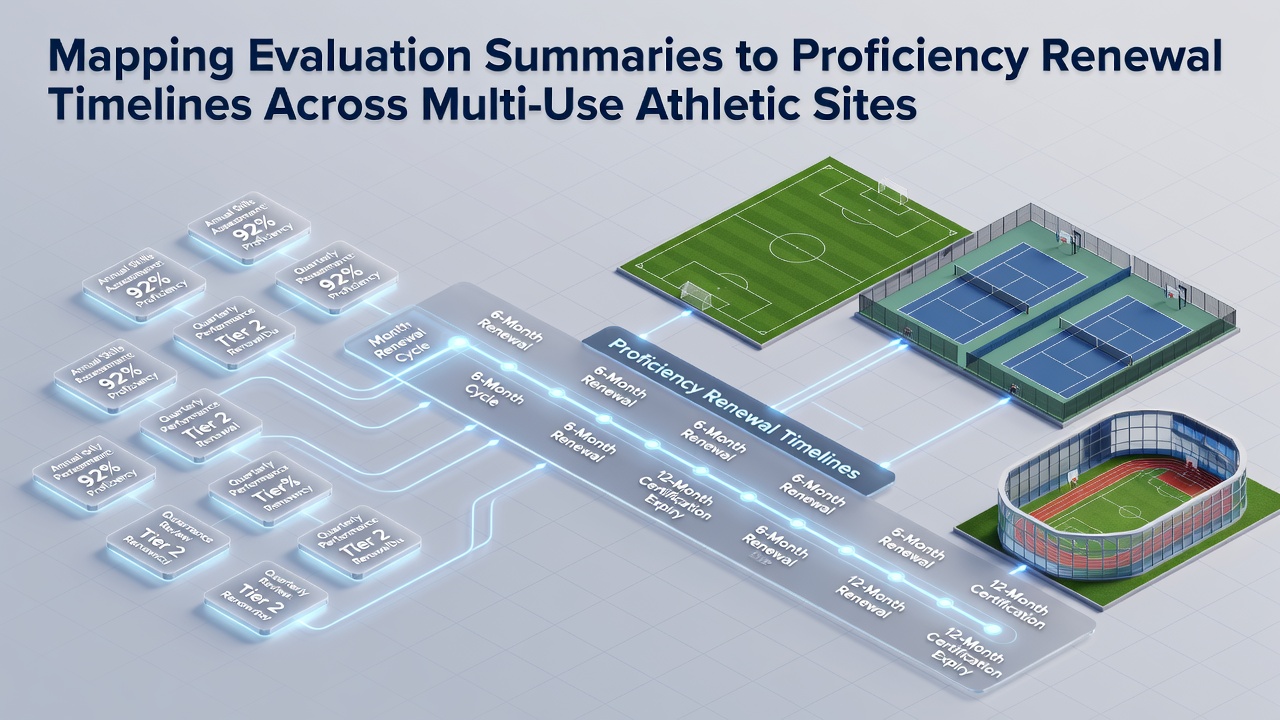
Evaluation summaries from facility inspections generate detailed findings on equipment condition, surface integrity, and operational compliance that directly influence when staff must renew their certifications and skill proficiencies. These summaries identify specific gaps in knowledge or procedure adherence that operators address through targeted renewal schedules rather than generic annual cycles. Across multi-use athletic sites where fields, courts, and arenas serve soccer, basketball, tennis, and track events in succession, the timing of proficiency renewals becomes critical because each sport introduces distinct equipment handling requirements and risk profiles that summaries capture in sequence.
How Evaluation Outputs Drive Timeline Adjustments
Inspection teams compile evaluation summaries that list deficiencies such as worn goalpost anchors or inconsistent lighting levels on shared playing surfaces, and facility managers then align these items with upcoming staff training deadlines. Research from the National Recreation and Park Association shows that sites using mapped timelines experience fewer repeat violations because renewal sessions focus on the exact issues flagged in recent summaries. Data collected across North American municipal complexes indicates that mapping reduces the average interval between problem identification and corrective training from six months to under ninety days when summaries feed directly into scheduling software.
Multi-use sites operate under layered regulations that include both local building codes and sport-specific safety standards, so evaluation summaries often reference multiple compliance layers at once. Operators review these layered findings to determine whether a staff member needs an immediate refresher on turf maintenance protocols or can wait until the next scheduled renewal window. The process avoids unnecessary training sessions while ensuring that high-priority items receive attention before seasonal usage peaks shift from one sport to another.
Integration Across Shared Venues
Facilities that host overlapping events require coordinated renewal timelines because one evaluation summary may cover equipment used by several user groups. A single report might note that basketball court padding requires adjustment and that the same padding affects volleyball setups later in the week, prompting managers to schedule a combined proficiency session for maintenance crews. This coordination prevents redundant training and keeps staff certifications current without disrupting event calendars.
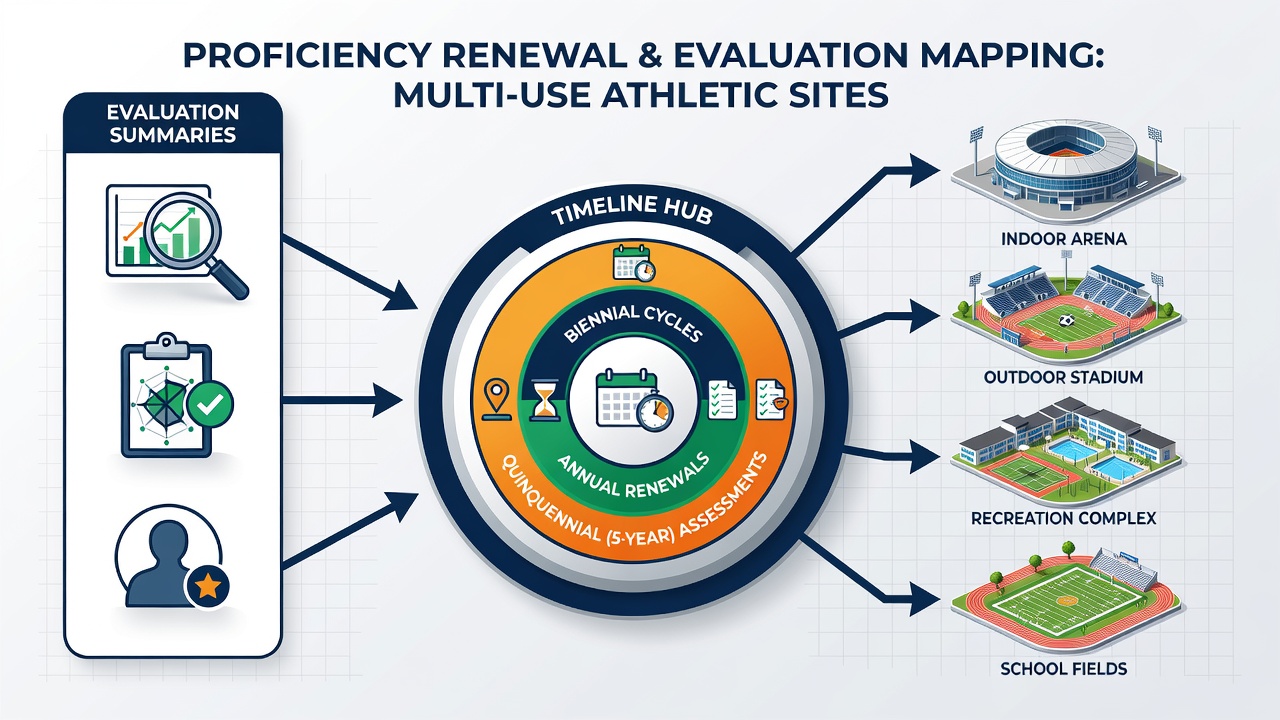
European studies conducted by the Council of Europe sport division highlight similar patterns where athletic hubs serving multiple disciplines maintain shared databases that link inspection outputs to individual operator renewal records. These databases flag when a certification lapses relative to the next scheduled evaluation, allowing proactive scheduling. In July 2026 several regional authorities plan to introduce updated digital reporting templates that will standardize how summaries categorize findings by urgency level, further streamlining the mapping process for sites operating under both national and international guidelines.
Practical Mapping Methods in Use
Many organizations employ color-coded dashboards that pull evaluation findings into staff calendars automatically. Green items indicate routine checks that align with standard renewal intervals, while red flags trigger accelerated training requirements. Australian government guidelines from Safe Work Australia recommend quarterly reviews of these dashboards so that proficiency timelines stay synchronized with the actual pace of facility wear and regulatory updates. Operators who follow this approach report that staff complete renewals with higher compliance rates because the content directly addresses documented issues rather than generic topics.
Case examples from Canadian provincial recreation departments illustrate how mapping works in practice. One complex serving ice hockey in winter and lacrosse in summer used evaluation summaries to identify that ice-resurfacing equipment handling skills needed renewal before the transition period, and the same staff required updated field-marking protocols for the summer sport. The mapped timeline allowed a single two-day session to cover both sets of competencies instead of separate courses months apart.
Conclusion
Effective mapping of evaluation summaries to proficiency renewal timelines creates a closed feedback loop that keeps multi-use athletic sites compliant while minimizing downtime for training. The approach relies on accurate data capture during inspections, clear categorization of findings by urgency, and scheduling tools that integrate both sets of information. As regulatory frameworks evolve and additional sites adopt standardized digital templates in 2026, the precision of these mapped timelines will continue to improve across shared athletic environments.