How Certification Timelines Shift When Compliance Data from Equipment Checks Informs Venue Maintenance Cycles Across Regional Athletic Hubs
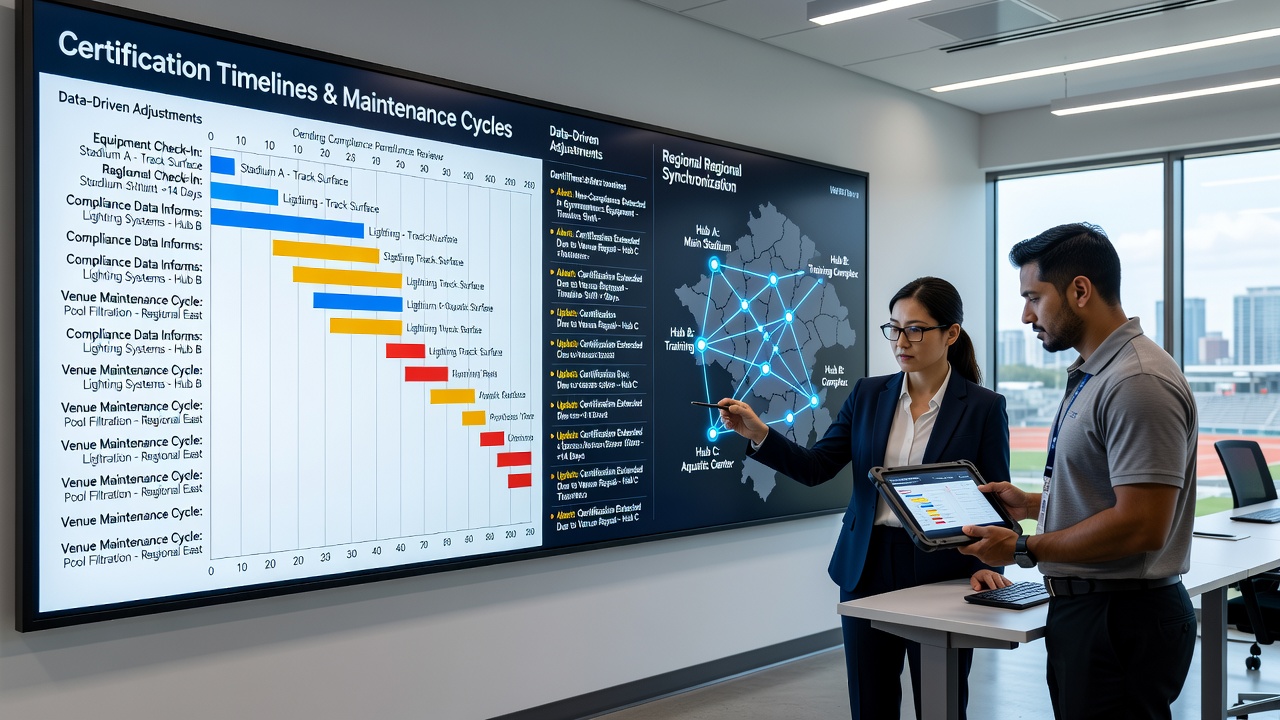 Regional athletic hubs manage certification timelines through interconnected systems where equipment verification outputs directly influence maintenance scheduling and subsequent approval cycles. Observers note that compliance data collected during routine equipment checks provides measurable indicators of wear patterns, structural stress points, and operational readiness, which then feed into adjusted upkeep intervals across multiple venues. Equipment checks generate quantitative records on items such as goalposts, safety netting, playing surfaces, and support structures. These records accumulate over successive inspection rounds, revealing trends that maintenance teams use to prioritize interventions before certification deadlines approach. When data shows accelerated degradation in high-use zones, facilities extend or compress maintenance cycles to align with upcoming certification reviews, preventing gaps in regulatory standing.
Data Integration Across Maintenance Frameworks
Maintenance cycles adapt when equipment compliance metrics highlight recurring issues in specific components. For instance, repeated findings of surface erosion on synthetic turf fields prompt earlier resurfacing actions, which in turn recalibrate the window for full venue certification. This linkage operates through shared databases that track inspection outputs alongside scheduled upkeep tasks, allowing regional coordinators to synchronize timelines across several sites rather than treating each as an isolated case.
Studies from multi-sport community complexes indicate that hubs incorporating real-time compliance feeds reduce certification delays by coordinating maintenance around peak data thresholds. In practice, a cluster of facilities in one district might shift annual certification from late summer to early fall after equipment data reveals seasonal humidity effects on metal fixtures, prompting preemptive treatments that clear compliance hurdles more efficiently.
Regional Patterns Emerging in 2026
By June 2026, several North American and European athletic networks had implemented standardized data protocols that link equipment verification directly to maintenance forecasting models. These protocols draw from aggregated inspection histories to predict when certain assets will require intervention, thereby influencing the spacing between certification assessments. Regional hubs in provinces such as Ontario and states including Colorado adopted these models after reviewing cross-facility datasets that showed consistent correlations between check frequency and approval turnaround times.
 Australian sports infrastructure reports similarly document how equipment data streams alter upkeep rhythms in community athletic zones. Facilities there integrate verification logs with predictive scheduling tools, resulting in maintenance windows that precede certification events by intervals calibrated to the severity of flagged issues. One documented case involved a multi-sport complex where net and barrier compliance readings triggered targeted reinforcement work, moving certification forward by several weeks to accommodate the completed cycle.
Operational Adjustments in Practice
Coordinators across these hubs use compliance dashboards to flag when equipment metrics exceed predefined thresholds, triggering maintenance reallocations that protect certification continuity. This approach appears in both urban district networks and rural athletic clusters, where shared resources allow smaller sites to borrow from larger data pools. The result shows as tighter alignment between check outputs and maintenance execution, which compresses the overall timeline from initial verification to final approval.
Evidence from collaborative research involving the U.S. Consumer Product Safety Commission and European sports facility standards bodies highlights measurable shifts in certification pacing when equipment data drives proactive cycles. Venues that previously operated on fixed annual schedules now adjust based on cumulative compliance indicators, producing more predictable approval sequences across interconnected regions.
Cross-Hub Coordination Mechanisms
Regional athletic organizations maintain central repositories that compile equipment check results from participating sites, enabling comparative analysis that informs collective maintenance planning. When one hub identifies a pattern of fastener fatigue in bleacher systems, neighboring facilities review their own datasets and accelerate related upkeep, which collectively stabilizes certification timelines for the entire network. This coordination reduces instances where isolated delays cascade into broader scheduling disruptions.
Training programs for facility operators incorporate modules on interpreting equipment compliance data for maintenance forecasting, ensuring personnel apply findings consistently. These programs draw from documented case studies across multiple jurisdictions, emphasizing how early integration of check results into upkeep calendars supports smoother transitions through certification reviews.
Conclusion
Certification timelines in regional athletic hubs continue to evolve as compliance data from equipment checks becomes a primary input for maintenance cycle decisions. This integration produces measurable adjustments in scheduling across diverse geographic areas, supported by shared data systems and standardized protocols. Facilities that embed these linkages maintain consistent regulatory standing while optimizing resource allocation for ongoing operational demands.