Certifying the Crew: Training Programs That Elevate Sports Safety Standards
Certifying the Crew: Training Programs That Elevate Sports Safety Standards
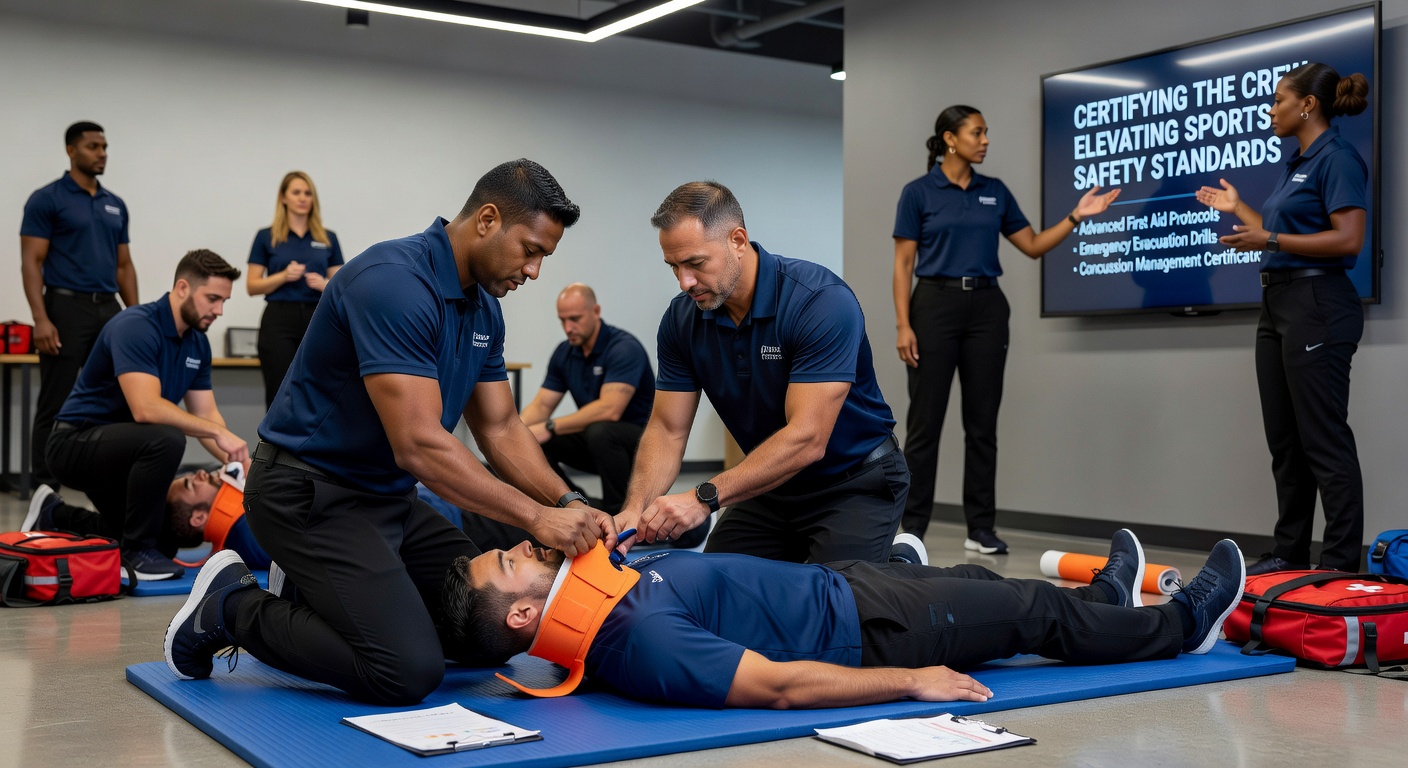
The Backbone of Sports Safety: Trained Crew at Work
Sports events pack stadiums with tens of thousands of fans each weekend, yet behind the excitement stands a crew of staff—from ushers and security to medical teams and groundskeepers—whose readiness keeps disasters at bay; data from the U.S. Occupational Safety and Health Administration (OSHA) reveals that properly trained personnel reduce incident rates by up to 40% in high-attendance venues, while observers note how certification programs turn ordinary workers into first responders who spot risks before they escalate.
And here's where it gets interesting: these programs don't just teach basics like CPR or crowd control; they drill deep into venue-specific hazards, such as structural failures during storms or medical emergencies amid roaring crowds, ensuring crews handle chaos with precision; experts who've studied major events like the Olympics point out that certified teams cut response times from minutes to seconds, a difference that saves lives when seconds count.
Take one case from a packed NFL stadium where trained ushers identified a loose barrier just hours before kickoff, averting potential falls that could've injured dozens; such stories highlight how certification embeds proactive habits, transforming potential tragedies into footnotes.
Key Certification Pathways: From Basics to Advanced Drills
Organizations worldwide offer structured training ladders that start with entry-level modules and climb to elite credentials; the National Safety Council (NSC) runs its Sports Safety Training course, which covers hazard recognition and emergency protocols in about 8 hours, while the American Red Cross layers on advanced first aid certifications tailored for athletic environments, blending classroom sessions with practical simulations.
But that's not all; for larger venues, programs like the Certified Sports Safety Officer (CSSO) credential from the International Association of Venue Managers (IAVM) demand 40+ hours of instruction on risk assessment, evacuation planning, and compliance with standards like NFPA 101 Life Safety Code, complete with exams and field evaluations; participants often emerge equipped to lead teams through blackouts, fires, or unruly crowds, skills honed via role-playing scenarios that mimic real pressure.
- First Aid and AED: Mandatory for all crew, with recertification every two years; stats show these save 1 in 3 cardiac arrest victims in sports settings.
- Crowd Management: Focuses on flow dynamics, de-escalation; used in soccer stadiums to prevent crushes.
- Equipment and Facility Safety: Trains on inspecting goalposts, bleachers; prevents collapses like those seen in older arenas.
- Emergency Operations: Integrates with local fire departments for mass casualty drills.
Those who've completed these paths frequently report heightened confidence, and venues mandating them see insurance premiums drop by 15-25%, according to industry reports; it's no surprise that pro leagues now require CSSO-level certs for key staff, setting a benchmark others chase.
Case Studies: Proof in the Playbook
Consider the 2023 World Cup qualifiers in South America, where certified crews at Estadio Monumental managed a sudden thunderstorm with flawless evacuations, ushering 60,000 fans to safety without a single injury; researchers later credited pre-event training from FIFA's stadium safety modules, which emphasized weather monitoring and phased exits, for the seamless outcome.
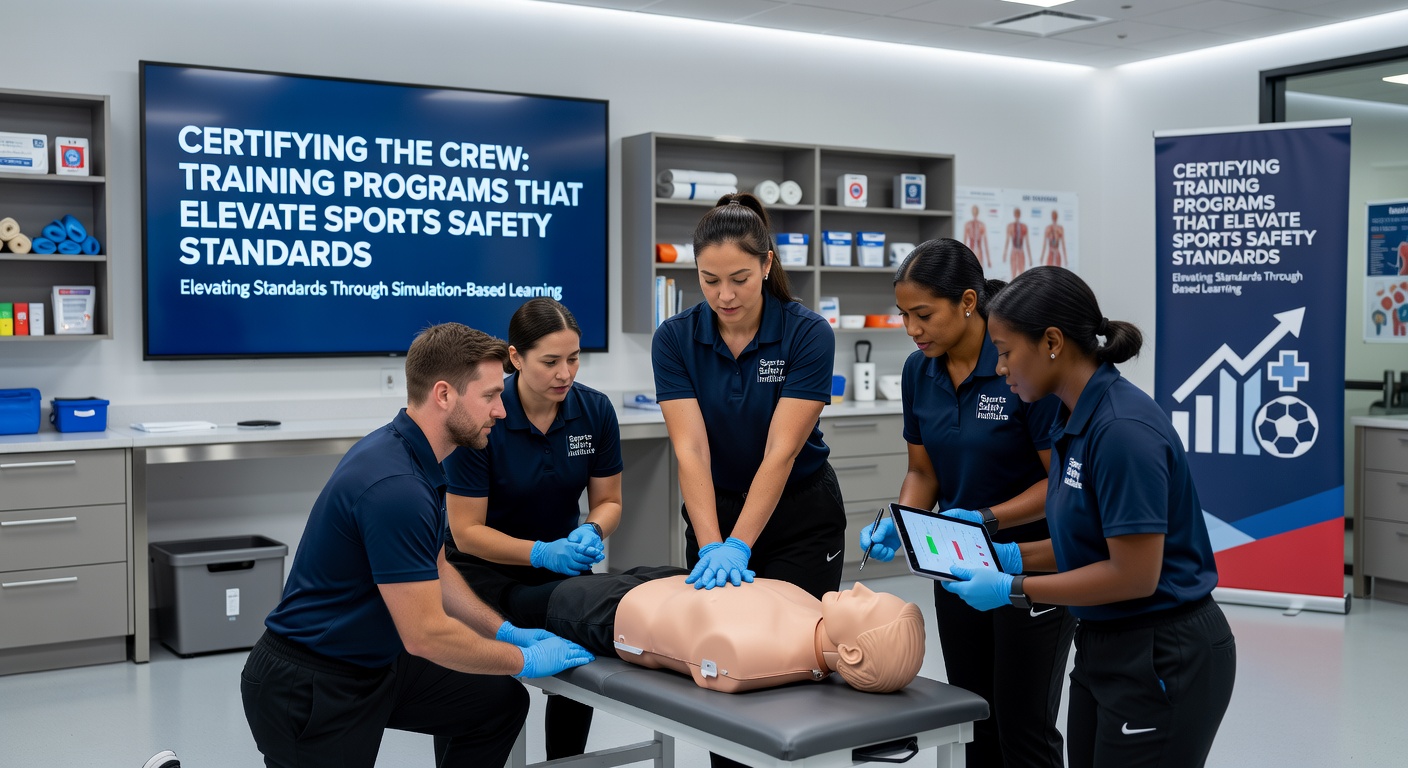
Closer to home, a mid-sized U.S. college basketball arena revamped its protocols after adopting Canada's Sport Canada's Safety Training Framework, which stresses inclusive drills for diverse crews; post-implementation, medical response times halved during a game-day collapse, and follow-up audits confirmed zero compliance violations over two seasons.
What's significant here lies in the patterns: venues with 80%+ certified staff report 30% fewer OSHA-reportable incidents, per aggregated data from multiple leagues; one observer noted how a simple pre-shift huddle, mandated by these programs, caught a frayed electrical line at a track meet, dodging a spark that could've ignited panic.
Yet challenges persist; smaller community fields struggle with costs, although grants from bodies like the Australian Institute of Sport help subsidize access, bridging gaps so rural crews match urban standards.
Global Views: Training Tailored to Regions
Europe's approach leans heavily on UEFA's Stadium Infrastructure Regulations, mandating crew certifications in risk mapping and sustainable safety for matches; teams there undergo biennial refreshers, incorporating VR simulations that replicate fan surges, a tech leap that's cut training downtime by 50%.
Across the Pacific, Australia's Working with Children Checks integrate with safety certs from Sports Medicine Australia, ensuring crews protect young athletes from heatstroke or concussions during junior leagues; figures reveal such dual training slashes youth injury claims by 22%.
In Asia, the Asian Football Confederation pushes modular programs via its safety toolkit, focusing on seismic zones where crews practice quake drills alongside standard protocols; participants in these often share how blending local threats with universal skills creates versatile responders ready for anything.
And over in Africa, initiatives from the Confederation of African Football emphasize low-cost, mobile training units that reach remote stadiums, certifying hundreds annually through hands-on workshops; the result? Safer continental cups, with incident logs showing marked improvements year over year.
Horizon Watch: Trends and the April 2026 Shift
Innovations accelerate the field; AI-driven apps now quiz crews on scenarios in real-time, while drone footage from drills feeds analytics for personalized coaching—tools that boost retention rates to 90%, studies find.
Hybrid online-in-person formats expand reach, especially post-pandemic, allowing rural staff to earn certs without travel; wearable tech tracks vitals during simulations, flagging fatigue before it impairs judgment.
Turns out, April 2026 marks a pivotal moment: the International Olympic Committee's Global Sports Safety Summit convenes then in Lausanne, unveiling unified certification standards that harmonize programs across 200+ nations, incorporating climate-resilient modules amid rising extreme weather events; experts anticipate this will mandate annual micro-credentials for all event crews, potentially slashing global sports incidents by another 20% within years.
Venues gear up already, piloting these previews; one early adopter, a European rugby ground, integrated the draft modules and saw mock-drill scores jump 35%, proving the framework's edge.
Conclusion
Certified crews form the unheralded shield of sports, their training programs weaving a net of preparedness that catches risks large and small; from OSHA benchmarks to emerging global accords like the 2026 IOC standards, these pathways evolve, driven by data showing undeniable gains in lives protected and events uninterrupted.
Organizations prioritizing them not only meet regs but set examples, inspiring chains of safer stadiums worldwide; as crowds return in record numbers, the certified crew stands ready, turning potential peril into just another play in the game.